Programs & impact

What Sophrosyne looks like in the real world.

A concise record of the community-facing work that has shaped the organization since 2024, alongside two educational infographics developed for public use.

Editorial note (June 1, 2026): Though we are currently based in Europe, several of our members are working hard to ensure that we develop a presence in the North America and East Asia region.
01 / Community health

Blood drives

Members have independently volunteered at blood drives and related community initiatives. This work reflects one of the simplest ways students can contribute directly to a health system that depends on community donors.

Why it mattersIn the E.U., someone needs blood or platelets about every 1.2 seconds. Blood components are used in surgery, trauma care, cancer treatment, chronic illness, and other situations.
02
Humanitarian support

Refugee assistance

Members have provided practical assistance to refugees and people displaced by crisis. The work is grounded in the idea that community health includes dignity, stability, and aid in times of crisis.

03
Direct care

In-home senior care

Members have also started an initiative providing in-home support to seniors, bringing care and practical assistance directly into people's daily lives.

Educational infographic 01

The global need for blood

A global snapshot of blood donation, availability, and why sustained voluntary donation matters.

Global blood donation infographic showing worldwide donations and differences in blood availability by country income level.
Sources: WHO — Blood safety and availability (12 June 2026) and WHO — World Blood Donor Day 2026. Educational information only.

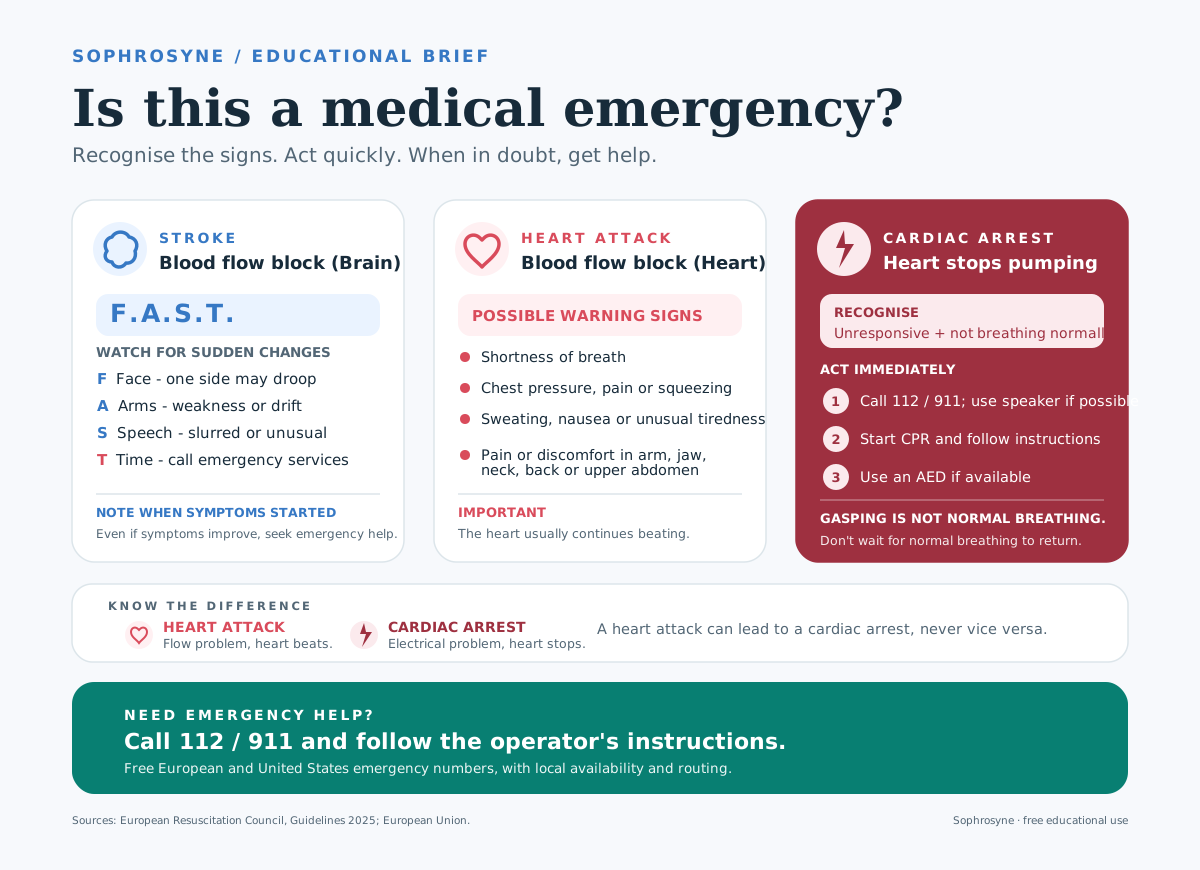
Educational infographic 02

Recognising a medical emergency

Stroke, heart attack, and cardiac arrest are different emergencies. Recognising what is happening and contacting emergency services promptly matters.

Europe-focused medical emergency infographic covering stroke, heart attack, cardiac arrest, and the European emergency number 112.
Sources: European Resuscitation Council — Guidelines 2025 and European Union — 112 emergency number Educational information only; local emergency arrangements may vary.